What is SIM swap fraud? Signs and first steps


Checked by The Proofmark editorial team against our methodology before publishing
The Proofmark · Our methodology
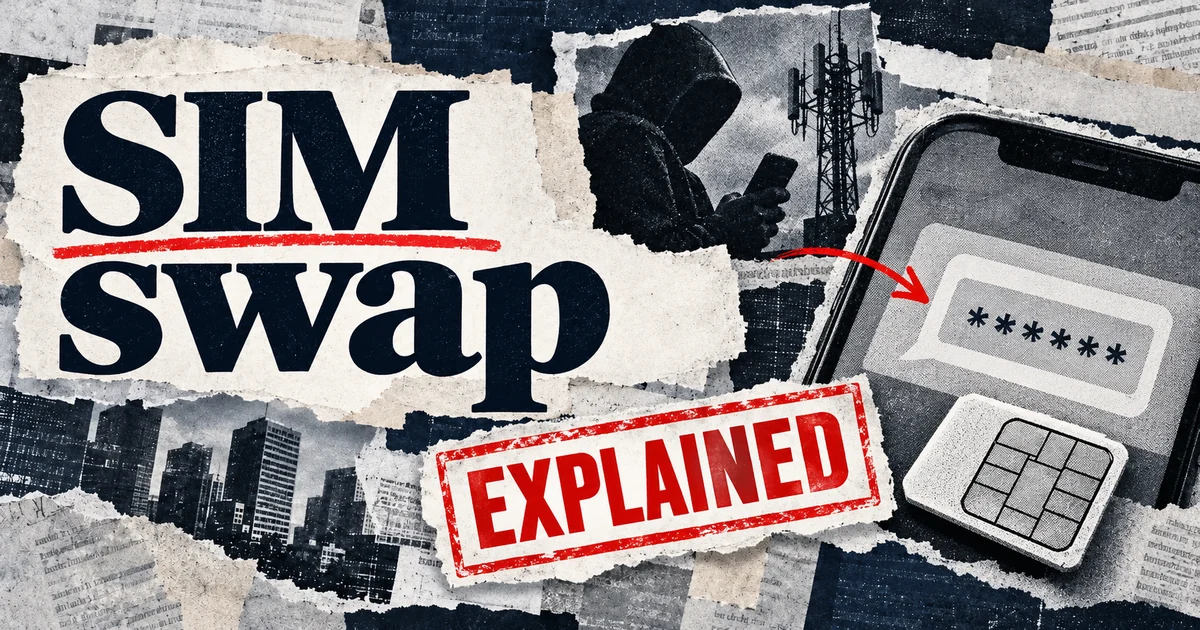
SIM swap fraud means someone takes control of your mobile number without your permission. The number is moved to a SIM or eSIM they control. Your phone may still be in your hand.
For example, a criminal poses as you and asks your network to replace a lost SIM. Calls and texts then reach their device. They may use login codes to try to enter your email, bank or other accounts.
Is a SIM swap the same as a stolen phone?
No. The attacker does not need to take your handset. A related scam, called port-out fraud, moves the number to another network. Both can put calls and text codes in someone else's hands.
Controlling a number does not reveal every password or automatically open every account. The risk depends on how each service checks your identity and resets access.
What are the warning signs?
Your phone may lose service. You may receive an unexpected SIM-change alert or password-reset message. You may then find that you cannot sign in to an account.
No signal alone is not proof of fraud. An outage or device fault can look similar. Ask your network whether an unauthorised SIM change or number transfer took place.
What should I do if I suspect a SIM swap?
- Contact your mobile network immediately from another phone or its official support service. Ask it to secure your account and restore your number.
- If bank access or money may be at risk, contact your bank through a verified route. Report any payments or changes you did not make.
- Once you regain control, change affected passwords and check account recovery details. Save alerts and case references.
If the number is still unsafe, use a different safe number for any callback, including ours. Our first-steps guide explains how to keep records and report a loss.
How can I protect my number?
Ask your network about an account PIN and blocks on SIM changes or number transfers. A PIN that unlocks your physical SIM is not the same as a password protecting your network account.
Where available, use an authenticator app or security key for important accounts. These do not rely on text messages reaching your number. Keep backup access details somewhere safe.
Would you like help understanding what happened?
Discuss my situation for a free phone consultation. We can help you organise what happened and the questions to ask your providers.
Have your network's reply and the times of any alerts ready. Never share login codes with us or an unexpected caller.
Sources
Where to get help in your country
Choose your country to see where to check a company, report a scam and get help.
Choose your country to see local contacts. If it is not listed, you can ask our team for help.
🇬🇧 The United Kingdom
🔎 Check the firm
FCA Firm Checker — Search the firm name, its website, or the reference number it gave you.
🚨 Report it
Report Fraud (City of London Police) — Report online or call 0300 123 2040. In Scotland, call Police Scotland on 101.
↩ Ask for your money back
Financial Ombudsman Service — Complain to the firm first, then bring it here. Free, and it can order the firm to pay.
Every address above was opened and checked by us on 30 September 2026. Tell us if one has moved.
Was this article helpful?
Thank you. Your feedback helps us improve.
Your reason has been saved.
Your callback request is received.
Our team will call .
You do not need to send another request. The call is free.
Your reference:
Request a free callback
Leave your number. We will talk through what happened.
Name and phone number are required. All other details are optional.
Your saved draft has been restored.
More from Encyclopedia
What is a money mule? Warning signs explained
Asked to receive and forward money? Learn what a money mule is, how these requests work and what to do if funds have already arrived.
What is phishing?
Phishing means using a false identity to trick you into sharing details, sending money or opening harmful content.
What is a romance scam?
A romance scam uses a false romantic relationship to gain trust and ask for money. Learn what the term means and how the trick works.
