KYC checks: normal verification or a withdrawal scam?


Checked by The Proofmark editorial team against our methodology before publishing
The Proofmark · Our methodology
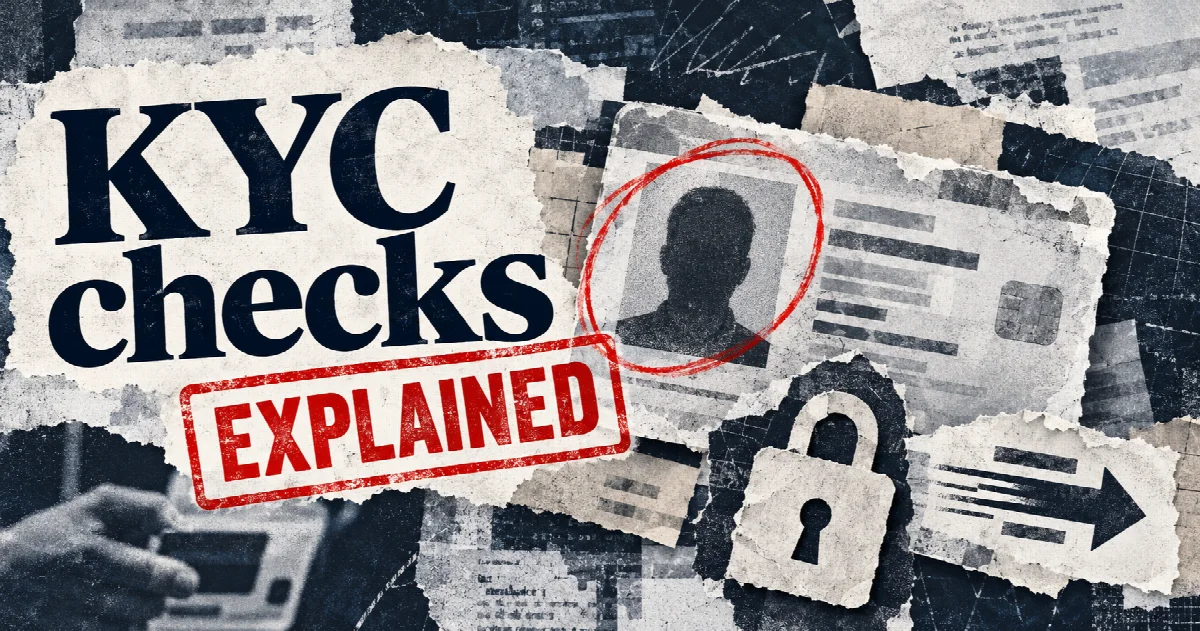
You ask to take your money out. The site asks for ID. Then it asks for more.
Is this a normal check, or a way to keep your money? The request alone cannot tell you. Check who is asking, what they need and whether they want a new payment.
What does KYC mean?
KYC stands for Know Your Customer. It means checks to confirm who a customer is. Banks and other financial firms use them as part of their duties to fight crime.
The rules vary by country and service. Checks may start when you open an account. They can also continue while you use it. FATF sets global standards; local laws put them into practice.
A site asking for ID is not proof that it is safe. A fake site can ask for the same papers as a real one.
Can a real firm ask for more documents before a withdrawal?
Yes. A later request does not, by itself, prove a scam. The firm may need to check a new risk or meet a legal duty.
Take Great Britain as an example. Its Gambling Commission says firms should ask sooner if they can. They should not wait for you to ask for your money.
But a new legal duty may mean more checks are needed. This rule is for gambling there. It is not a rule for every firm worldwide.
Ask the firm to explain what is missing. Keep its answer and any case number. A delay and a demand for more money are different problems.
What should I check before sending ID?
Check the business first. Find its full legal name. Compare the website and contact details with an official register where a licence is needed. Use our broker licence checklist.
Check the request through a separate route. Use the firm's app or a contact you found yourself. Do not trust a link just because it arrived in the same chat as earlier messages.
Ask how to send the document safely. Find out what is needed and why. Do not put a passport, card number or bank login in a public comment.
Do not give anyone your PIN, password or crypto recovery phrase. Someone asking to take control of your device needs a separate check too.
Is a payment to unlock KYC a warning sign?
Yes. Pause if the site says you must send a new deposit to unlock your balance. The label may be “tax”, “validation” or “verification”. The label does not prove the demand is real.
Investor.gov calls this advance-fee fraud. You are told to pay to get money out. That does not mean every fee from a real firm is fraud.
Keep the exact demand, the amount and the payment details. Check it with a source outside the site before you act. Do not keep paying because the next fee is said to be the last.
What if I already sent documents or money?
If you think you sent money to a scam, contact your bank or payment provider now. Ask which steps apply to your payment. Do not wait for a callback from us.
If you sent ID to a suspected fake site, contact the body that issued it. Ask what to do for that document in your country. Keep records of what you shared and when.
Live in Australia or New Zealand? IDCARE can help with misuse of your ID. In other places, seek local help for identity theft. Our reporting guide has routes for several countries.
Can you help me understand the request?
Yes. Request a free call. Tell us the site's name and what it asked you to do. We can talk through the warning signs and your next step.
You do not need to send us your ID or bank login. We cannot approve KYC, release a balance or promise a refund.
If this concerns a casino, also read our licence and withdrawal guide. If a stranger offers to get your money back, check our recovery scam guide.
Sources
Where to go in your country
Scams cross borders. The people who can do something about them do not. Choose your country below, or change it if our guess is wrong.
Choose your country to see local contacts. If it is not listed, you can ask our team for help.
🇬🇧 The United Kingdom
🔎 Check the firm
FCA Firm Checker — Search the firm name, its website, or the reference number it gave you.
🚨 Report it
Report Fraud (City of London Police) — Report online or call 0300 123 2040. In Scotland, call Police Scotland on 101.
↩ Ask for your money back
Financial Ombudsman Service — Complain to the firm first, then bring it here. Free, and it can order the firm to pay.
Every address above was opened and checked by us on 30 September 2026. Tell us if one has moved.
Was this article helpful?
Thank you. Your feedback helps us improve.
Your reason has been saved.
Your callback request is received.
Our team will call .
You do not need to send another request. The call is free.
Your reference:
Request a free callback
Leave your number. We will talk through what happened.
Name and phone number are required. All other details are optional.
Your saved draft has been restored.
Read next
What is a romance scam?
A romance scam uses a false romantic relationship to gain trust and ask for money. Learn what the term means and how the trick works.
Terms used in this article
More from Encyclopedia
What is phishing?
Phishing means using a false identity to trick you into sharing details, sending money or opening harmful content.
What is a romance scam?
A romance scam uses a false romantic relationship to gain trust and ask for money. Learn what the term means and how the trick works.
Pig butchering scams: signs and what to do if you paid
A new online friend may use trust to sell a fake investment. Learn the warning signs, why small payouts prove little, and what to do next.
